terça-feira, 30 de abril de 2019

Arbor Day Ambitions: How An Agriculture Startup Plans To Populate The World With Trees

Carrie McClain, founder of Little Saps, surrounded by her seedlings.

Little Saps

Artificial intelligence, blockchain, and trees. What do all three of these things have in common? They are vital pieces of our future and also where innovation is happening right now.

Carrie McClain, the founder of Little Saps, proves that innovation can be found in unexpected places -- in her case, the Fraser Fir trees populating the lush, rolling hills of Appalachia.  

But let's start from the beginning. McClain comes from a family of entrepreneurs and has worked alongside her parents, John and Kathy Chefas, farmers and owners of the Christmas tree farm, Hart-T-Tree Farms, for eight years. Nestled deep in the Blue Ridge Mountains of Ashe County, North Carolina, their farm is on fertile land perfect for growing Fraser Firs, the sturdiest of Christmas trees and most capable of holding decadent decorations.

The Chefas family farm, Hart-T-Tree Farm in Grassy Creek, North Carolina.

Little Saps

Agriculture's oversupply and scarcity cycle

Having farmed for over 40 years, the Chefas' had weathered through many cycles of oversupply and scarcity. But this last period of scarcity was different.

This time, many farmers in Appalachia opted to raise their own seedlings.  They wanted to not only secure control of their supply, but they also wanted to take advantage of the scarcity and grow to sell the seedlings as well.  With so many farmers feeling bullish about the seedlings, suddenly, there was worry that too many seedlings would trigger oversupply of trees and depress the wholesale prices - yet again.

An idea is cultivated

With this, McClain sensed an opportunity.

"I would end up at meetings of Christmas tree farmers and this worry was a central point of discussion.  I knew that we couldn't control how many seedlings everyone planted; that would take a miraculous amount of trust and coordination.  Instead, what we needed to do was expand our markets. We needed to think outside of the box and find new, alternative ways to sell our trees."

This focus on how to grow the market led to the birth of Little Saps. Little Saps offers evergreen seedlings, packed, potted, or plain, to consumers and companies alike, so they can mark special occasions, celebrate holidays, or quite simply, brighten someone's day.

Little Saps at an event at Lees-McRae College in Banner Elk, North Carolina.

Little Saps

As McClain said, I love the idea of sharing something that has roots. Something that will endure for years and years. Most especially, I love that by sharing our Little Saps with others, we are helping make the world a greener place. We are helping to ensure a clean future for our children and grandchildren. My family and I recently visited the polar bear exhibit at the North Carolina Zoo in Asheboro. The exhibit teaches visitors how to be good stewards of the environment. The first suggestion - plant a tree!

McClain pays particular attention to Little Saps' packaging and design, wanting to convey the "elegance, strength, wisdom, beauty and longevity" that many associate with trees. Her goals are far-reaching, just like the trees she hopes to grow. She wants to create an alternative revenue model that will help diversify the farm and support it through the inevitable cycles of plenty and scarcity. McClain believes that in differentiating from other family farms, she will help lift up and unlock greater opportunity for her fellow farmers.

A commitment to sustainable innovation

Moreover,

McClain and Little Saps' mission and vision are ambitious. And frankly, many entrepreneurs could learn from her patient persistence to build a new business (while still an active part of the management of her family's farm) centered around sustainable products that are harmonious with the local economy and environment.

A Little Sap as a wedding favor.

Little Saps

On this Arbor Day and at the end of Earth Week, it only seems fitting to highlight an entrepreneur who wants to put back into Mother Earth instead of taking away and marries profit with purpose.

McClain provides a compelling pitch for buying and gifting sustainably. Who's in?

segunda-feira, 29 de abril de 2019

‘Volcano mulching,’ how to plant a tree, and when to pull the planting trigger: This Weekend in the Garden

Tips for tree-planting

Today is Arbor Day, that day devoted to encouraging people to planting a new tree or three.

You might run into a variety of differing advice on exactly how to do this deed correctly. It doesn’t help that the recommended best practices have changed over the years.

Here’s a rundown on how to plant a tree, according to the current generally accepted process used by pros:

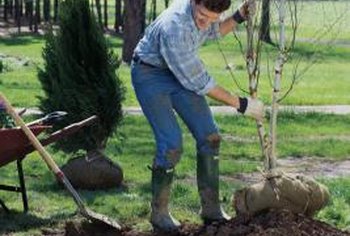
1.) Loosen the soil at least three times the width of the rootball but only as deep. Digging deep holes leads to soil settling, which ends up sinking the tree lower than it should be after planting.

2.) If the soil is poor, improve it with a little compost… but no more than 10 to 20 percent of the total volume. Don’t over-improve or the roots will circle in the “good stuff,” plus water will back up in the hole when it can’t seep out the sides as fast as it’s draining into the improved soil.

3.) Plant so the root flare (the widened base of the trunk just above the roots) is above grade.

4.) Fray out any circling roots before planting, and remove burlap, wire, baskets, and any other non-root items once the tree is safely situated in the hole.

5.) Don’t stake unless necessary. If you do, use wide bands â€" not wire or rope. Remove staking within one year.

6.) Cover the soil with two to three inches of bark mulch in a minimum six-foot diameter mulched area around the tree. Keep mulch two to three inches away from the trunk. No volcano mulching!

7.) Water well immediately after planting, then often enough to keep the soil consistently damp just below and all around the rootball… but never so much that it’s soggy. One good soaking every five to seven days is better than daily watering.

8.) There’s usually no need to fertilize a new or mature tree. Too much is as bad as not enough. Base your fertilizer application on what a soil test recommends.

Do-it-yourself Penn State soil test kits are available for $9-$10 from county Extension offices, many garden centers, and online at Penn State’s soil test lab.

9.) Other than removing broken branches, don’t prune before or right after planting. Begin your pruning to shape the tree the second year.

Don't pack mulch high up on tree trunks. This kind of "volcano mulching" can harm or kill trees.

Don't pack mulch high up on tree trunks. This kind of "volcano mulching" can harm or kill trees.

Mulch that can kill

A little mulch is a good thing. Too much, though, can stunt plant growth and even kill large, mature trees.

Mulch is anything that covers the soil, but in the central-Pennsylvania landscape, it’s usually a layer of shredded hardwood (ground-up trees and branches), bark, or wood chips.

In moderate amounts, mulch chokes out weeds, slows moisture loss from the soil, moderates swings in soil temperature, and adds nutrition and organic matter to the soil as it breaks down.

A total layer of two to three inches is fine around trees, shrubs, and evergreens. One or two inches is enough around flowers.

Adding more and more mulch every year causes a buildup that can hinder oxygen exchange in the soil, causing roots to suffocate. So if you already have the suggested amounts in place, don’t add more.

If you have a little too much, cultivate the existing layer to break up matting and allow improved air exchange and drainage.

If you have a lot too much, you’re better off removing it down to an optimal layer. Use the excess in an area that’s short on mulch, use it to expand mulched areas around your trees, compost it, or pile up it for use later.

One of the worst practices is packing mulch up on the trunks of trees. It’s usually done by over-zealous weed-warriors or possibly by people who think the extra mulch helps support the tree or makes it look nice.

Compounding the problem is that even some landscape companies pack mulch a foot or more up tree trunks, a practice that’s called “volcano mulching” because of the shape of the result.

Volcano mulching is not only bad for suffocating roots, it encourages bark to rot. The effect is akin to burying a tree too deep and exposing a tree’s trunk and bark to conditions similar to underground â€" not to above grade where the trunk is adapted.

Packing mulch against the trunk also makes it easier for insects and rodents to feed on the trunks under cover.

If you have any volcano-mulched trees, the best thing you can do is get out there and pull it away ASAP.

All mulch should be kept a few inches back away from the bark of trees and shrubs â€" and from the stems of perennials, for that matter.

If you’re trying to save work by reducing the back-breaking job of mulching altogether, cover bare ground instead with low-growing, groundcover plants.

Most annual flowers shouldn't be planted until all danger of frost is past.

Most annual flowers shouldn't be planted until all danger of frost is past.

When to plant?

End of April marks the milestone of the Harrisburg area’s average last killing frost of the spring.

That means that approximately half of the time, we’re done already with frost.

If you’re a gambler, you’ll probably start to plant your summer annuals (petunias, geraniums and such) and your warm-weather vegetables (tomatoes, peppers, cucumbers, beans, etc.)

Keep in mind that you might need to cover these early-planted warmth lovers in years when a late-April or early-May frost pops up.

Products such as floating row covers, frost blankets, and even old sheets can buy a few degrees of protection for the few sub-freezing, overnight hours that otherwise would kill a begonia or bell pepper.

Most people elect to wait until our all-time latest killing spring frost, which is May 11 in the Harrisburg area. Frosts have happened in late May in rural areas and in higher elevations of northern Dauphin County and beyond.

That’s why you’ll often hear gardeners using Mother’s Day as their cue to plant summer annuals and warm-weather vegetables.

A compromise is to wait until the end of April and look at the 10-day temperature forecast. If there’s nothing in the outlook even close to freezing, that would be a reasonably safe bet to plant early.

By the way, there’s no need to cover plants that are adapted to spring cold when a late-April or early-May frost occurs.

These include spring-flowering bulbs (daffodils, hyacinths, tulips, etc.); perennial flowers already blooming or poking up (salvia, sedum, daylilies, etc.); cold-hardy vegetables (cabbage, broccoli, onions, spinach, lettuce, etc.), and trees, shrubs, and evergreens that are listed as winter-hardy in our area.

Most of the Harrisburg area ranges from Zone 6A to Zone 7A, indicating winter low temperatures bottoming out at minus-10 to 5 degrees above zero.

The Ebony Project: Taylor Guitars Plants Trees in Cameroon to Preserve This Vulnerable Tonewood

[unable to retrieve full-text content]Taylor Guitars has long been a leader in responsible guitar making, working with domestic and international suppliers to ensure that its instruments are made of sustainable tonewoods. In 2011, Taylor ...

quinta-feira, 25 de abril de 2019

How to best manage aphid outbreaks on fruit trees (and other plants)

Marisa Y. Thompson Southwest Yard and Garden

Published 5:54 AM EDT Apr 21, 2019

Question: What's causing our peach tree leaves to wither and curl up completely and should we also be worried about our apricot trees nearby?

Lorraine J., Los Lunas

Answer: Looking at the sample you brought in, the leaf curl on your peach tree branches is pretty extreme, and when I turned over and uncurled the leaves I found a ton of chubby green aphids hiding underneath. Some of the leaves, especially at the tips, are stunted and probably won't fully expand after so much damage. Another aphid clue is the shiny, sticky coating on many of the leaves. The sticky shellac is called honeydew, which is a darling name for aphid excretion or — pardon my French — poo.

In my first New Mexico summer I was walking down Lomas Avenue in Albuquerque on the sidewalk in front of UNM Hospital, just minding my own business, when I felt a lovely mist falling from the sky. It was brief, so I turned around to experience it again. I found that this fine mist was coming from a street tree that I now know to be a desert willow. I remember standing under the desert willow for a while, enjoying the evaporative cooling effect, amazed at how a desert plant could be so miraculous and kind. But that mist wasn't water. It wasn't until I took my first entomology class years later that I learned the truth about honeydew.

Aphids of various species can be expected each year on fruit trees and other landscape trees, shrubs, flowers and vines. These guys suck fluids from leaves and excrete a sugary liquid that attracts ants and gets sticky and shiny as it coats the foliage.

Another effect of the aphid's piercing-sucking mouthparts and eating habits is that the leaf can get deformed and start to curl up partially or entirely — especially on stone fruit trees like peaches, apricots, cherries, etc. Here's where the task of controlling aphid populations gets tricky because they're protected inside the curled up leaves.

For home gardeners, I recommend keeping an eye out for shiny leaves, chubby aphids, and curled, deformed leaves throughout the season on all landscape plants. When you find some, don't worry about eradicating the entire population — that's not even possible. Just use a hose sprayer to power wash the visible aphid clusters off the plants' leaves, buds, and stems with water. Once washed off, aphids tend to be disoriented and slow at getting all the way back up to the tender, succulent new growth that they love.

Also keep an eye out for beneficial insects such as praying mantises, green lacewings, and ladybugs (more formally known as lady beetles). Ladybugs in the larval stage are weird, stout, black alligator-looking wigglers, often, but not always, with red markings. Insecticides might hurt the beneficial insect population before they've had a chance to work their magic. For photos of these beneficials, visit https://nmsudesertblooms.blogspot.com/.

Within an hour of examining Lorraine's aphid-infested branch, I got a call from Otero County Extension Agent Sid Gordon to give me a heads up that two separate peach tree branch samples had been submitted to their County Extension Office in Alamogordo, both covered in aphids and one with lady beetle larvae, that very morning. So if you haven't noticed signs of aphids yet, step outside, take another look, and keep vigilant.

I shared photos of the peach tree stem with NMSU Extension Entomology Specialist and NMDA State Entomologist Dr. Carol Sutherland. She pointed out the tiny white flaky bits as empty exoskeletons leftover after some aphids molted. "As the weather warms, the blackish aphids on stone fruits will likely fly away to alternate summer hosts. Green peach aphids will remain on peach trees all year long. As populations get large, winged aphids may be produced, but the tree will likely keep a residual aphid population. Natural enemies should have a field day on these things. Whether or not that will be good enough to control the pests to an acceptable level is undetermined, but possible." For more aphid info, check out the NMSU Extension Guide "Aphids and Their Relatives."

Luckily, this early in the season, foliar damage can be completely overcome by another flush of growth and even badly defoliated fruit trees can rebound in just a few weeks. Give the tree a leg-up by watering the entire root zone sufficiently to a depth of about 18 to 24 inches, depending on the size, and be sure to let the soil dry between irrigations.

For more gardening information, including decades of archived Southwest Yard & Garden columns, visit the NMSU Extension Horticulture page (http://desertblooms.nmsu.edu/), follow us on social media (@NMDesertBlooms), or contact your County Extension office (https://aces.nmsu.edu/county).

Marisa Thompson, PhD, is the Extension Horticulture Specialist for New Mexico State University and is based at the Agricultural Science Center at Los Lunas.

More Southwest Yard and Garden:

  • When is it safe to take houseplants outside?
  • What fruit trees are recommended for my area?
  • Late frost? Here are some tips for protecting fruit trees
  • Learn how to plant trees for Spring

    Please enable Javascript to watch this video

    GRAND RAPIDS, Mich. - Spring has sprung which means its time to plant new trees.

    Friends of Grand Rapids Parks and Habitat for Humanity of Kent County are teaming up to teach West Michigan how important it is to plant new trees each and every season.

    Learn all the skills you need to know in their Neighborhood Forester Tree Planting Class in order to help keep the environment healthy and growing.

    This whole class leads up to the 4th annual Mayor's Greening Initiative where numerous communities members will soon be planting 300 trees in the Roosevelt Park neighborhood.

    quarta-feira, 24 de abril de 2019

    Travelers Commits to Plant up to One Million Trees to Aid Reforestation Efforts

    HARTFORD, Conn.--(BUSINESS WIRE)--The Travelers Companies, Inc. (NYSE: TRV) today announced a new initiative with American Forests, the country's oldest nonprofit conservation group, to plant a tree when personal lines customers choose paperless billing. The company will plant up to one million trees through April 2020, supporting the reforestation of endangered ecosystems in several states.

    "Our commitment to plant trees with American Forests will hopefully encourage more policyholders to go digital," said Michael Klein, Executive Vice President and President of Personal Insurance at Travelers. "Paperless billing provides an added level of convenience for customers, while helping minimize our environmental impact through a reduction in paper consumption and our overall carbon footprint."

    "We are thrilled to work with Travelers on this ambitious commitment, which is one of American Forests' largest corporate initiatives ever," said Jad Daley, President and CEO of American Forests. "Travelers' generous support will enable us to replant forests across some of America's most important natural landscapes, restoring their capacity to collect and filter drinking water, provide wildlife habitat and naturally capture carbon emissions to slow climate change."

    This partnership exemplifies how Travelers integrates climate-related issues into its business. Other examples include:

  • Monitoring, assessing and responding to the risks posed by changing climate conditions in order to provide products and services that both help our customers mitigate those risks and meet our long-term financial objectives.
  • Monitoring opportunities presented by evolving climate conditions and more "environmentally friendly" trends in order to provide insurance products and services that address our customers' needs, such as green building coverages and discounts for fortified or LEED certified homes and hybrid/electric vehicles.
  • Providing guidance to customers, including through the company's network of 600+ Risk Control consultants, to help customers prepare for natural disasters and mitigate the risks associated with changing climate conditions and/or with "green" products or systems they may have installed.
  • Sponsoring the Insurance Institute for Business and Home Safety (IBHS), the BuildStrong Coalition, Habitat for Humanity® and the Wharton Risk Center to promote stronger building codes and more resilient communities and to influence industry standards and best practices; among other things, Travelers partners with Habitat for Humanity® and IBHS to build affordable, IBHS FORTIFIED™ homes in coastal areas.
  • Creating the annual Excellence in Community Resilience Award of $100,000 to recognize organizations that demonstrate leadership in addressing disaster preparedness and community resiliency.
  • Continuously analyzing the company's impacts on the environment and looking for cost-effective ways to minimizing those impacts, such as by ensuring that all Travelers-owned campuses are ENERGY STAR® certified and undergo an annual recertification process, and setting a goal to reduce the company's absolute Scope 1 and Scope 2 emissions by 40% by 2020, based on a 2011 base year; as of the end of 2017, we have achieved 88% of this goal.
  • For more information and to sign up for paperless billing, visit travelers.com/paperless.

    About TravelersThe Travelers Companies, Inc. (NYSE: TRV) is a leading provider of property casualty insurance for auto, home and business. A component of the Dow Jones Industrial Average, Travelers has approximately 30,000 employees and generated revenues of approximately $30 billion in 2018. For more information, visit www.travelers.com.

    How to plant by the numbers

    A-A+

    Understanding numbers usually applies to the high finance world of Wall Street or maybe just our checkbook. We seldom think of numbers in relationship to landscape. The numbers may be the eye appeal that is worthy of second glances from passersby.

    The standard rule of thumb has always been planting in threes and fives. Maybe there are ways to successfully incorporate other numbers. Understanding the numbers and how to use them can give you confidence. It gives you the freedom to fudge that long-standing rule and satisfy your own taste in design.

    • One plant can be either a specimen plant or a unifying plant. I planted blue lyme grass in front of a giant boulder and close to a blue spruce. The grass has a bluish tint that echoes the blue of the blue spruce. In this case it acts as a specimen plant and a unifier.

    • Two plants signal formality, and are usually used to mark both sides of an entrance or passageway. Formality is not my style. I would feel like I am being watched, checking I always walk a straight line.

    • Three plants are a charm as long as they aren’t used in a straight row like soldiers at attention. That would be dull. If you have enough space, group them in an equilateral triangle. This arrangement looks particularly good with mounding or vertical plants. Be sure to leave space between plants, especially if there are three different kinds. Another arrangement could use two plants with a garden ornament or a birdbath to count as the third item in the set of three.

    • Four plants can be divided in various ways. Avoid planting two and two on the sides of an entry. That planting often feels off-kilter, always calling for more, making it three and three.

    You could plant one plant in each quadrant of a circle or square, either planting four distinct specimens or repeating the same plant. A planting that also works well would be dividing the four plants into three plants plus one. Position three plants on one side of a path and one on the other. This planting could be especially effective if an evergreen is used as the one plant because of its strong visual weight.

    • Five is the number most often used. A classic example of 5 is to set up two parallel rows with three in one row and two in the other. This works best in a rectangular bed. Positioning two plants on one side of a path and three on the other does not work but having four plants balanced with the fifth plant separate feels right.

    • Six is two sets of three. This works best when broken into two groups. Either duplicate the arrangement of threes in a staggered row or in a triangle or position them to fill a corner. Dividing into groups of two, or a line of six, doesn’t command much attention.

    Now, let the fun begin by drawing out the six possibilities. Roughly sketch out either a straight or meandering path, whichever best suits your landscape. Just use circles to indicate your plantings and let your eyes lead you to a planting what best suits your personality.

    When you are working on a plan near an entryway, avoid the following five plant traits:

    • Plants that have thorns that can snag clothes and skin.

    • Plants that attract bees. Many plants attract a few bees, but try to keep bee magnet plants several feet away from your walkway or patio where you won’t brush against them.

    • Plants that sprawl. Plants that spread and sprawl should be planted far enough from a sidewalk that they don’t fall into your path and present a tripping hazard.

    • Plants that have branches at face height. Either prune branches high enough to be out of the way, or keep these plants far enough back that at their mature size they won’t hang out over the path. I had to do some pruning on an apple tree after I observed the lawn service man having to duck under the branches to mow.

    • Plants that outgrow their space too quickly. If you need to prune a shrub severely every year to keep it within bounds, take it out and replant with a different variety.

    â€" Reporter: douville@bendbroadband.com

    23002837

    sábado, 20 de abril de 2019

    Tree.com (TREE) Earnings Expected to Grow: What to Know Ahead of Next Week's Release

    Tree.com (TREE) is expected to deliver a year-over-year increase in earnings on higher revenues when it reports results for the quarter ended March 2019. This widely-known consensus outlook gives a good sense of the company's earnings picture, but how the actual results compare to these estimates is a powerful factor that could impact its near-term stock price.

    The stock might move higher if these key numbers top expectations in the upcoming earnings report, which is expected to be released on April 26. On the other hand, if they miss, the stock may move lower.

    While management's discussion of business conditions on the earnings call will mostly determine the sustainability of the immediate price change and future earnings expectations, it's worth having a handicapping insight into the odds of a positive EPS surprise.

    Zacks Consensus Estimate

    This mortgage lending service provider is expected to post quarterly earnings of $1.26 per share in its upcoming report, which represents a year-over-year change of +14.6%.

    Revenues are expected to be $238.95 million, up 32% from the year-ago quarter.

    Estimate Revisions Trend

    The consensus EPS estimate for the quarter has remained unchanged over the last 30 days. This is essentially a reflection of how the covering analysts have collectively reassessed their initial estimates over this period.

    Investors should keep in mind that an aggregate change may not always reflect the direction of estimate revisions by each of the covering analysts.

    Price, Consensus and EPS Surprise

    Earnings Whisper

    Estimate revisions ahead of a company's earnings release offer clues to the business conditions for the period whose results are coming out. Our proprietary surprise prediction model -- the Zacks Earnings ESP (Expected Surprise Prediction) -- has this insight at its core.

    The Zacks Earnings ESP compares the Most Accurate Estimate to the Zacks Consensus Estimate for the quarter; the Most Accurate Estimate is a more recent version of the Zacks Consensus EPS estimate. The idea here is that analysts revising their estimates right before an earnings release have the latest information, which could potentially be more accurate than what they and others contributing to the consensus had predicted earlier.

    Thus, a positive or negative Earnings ESP reading theoretically indicates the likely deviation of the actual earnings from the consensus estimate. However, the model's predictive power is significant for positive ESP readings only.

    A positive Earnings ESP is a strong predictor of an earnings beat, particularly when combined with a Zacks Rank #1 (Strong Buy), 2 (Buy) or 3 (Hold). Our research shows that stocks with this combination produce a positive surprise nearly 70% of the time, and a solid Zacks Rank actually increases the predictive power of Earnings ESP.

    Please note that a negative Earnings ESP reading is not indicative of an earnings miss. Our research shows that it is difficult to predict an earnings beat with any degree of confidence for stocks with negative Earnings ESP readings and/or Zacks Rank of 4 (Sell) or 5 (Strong Sell).

    How Have the Numbers Shaped Up for Tree.com?

    For Tree.com, the Most Accurate Estimate is the same as the Zacks Consensus Estimate, suggesting that there are no recent analyst views which differ from what have been considered to derive the consensus estimate. This has resulted in an Earnings ESP of 0%.

    Story continues

    On the other hand, the stock currently carries a Zacks Rank of #3.

    So, this combination makes it difficult to conclusively predict that Tree.com will beat the consensus EPS estimate.

    Does Earnings Surprise History Hold Any Clue?

    While calculating estimates for a company's future earnings, analysts often consider to what extent it has been able to match past consensus estimates. So, it's worth taking a look at the surprise history for gauging its influence on the upcoming number.

    For the last reported quarter, it was expected that Tree.com would post earnings of $1.51 per share when it actually produced earnings of $1.22, delivering a surprise of -19.21%.

    Over the last four quarters, the company has beaten consensus EPS estimates two times.

    Bottom Line

    An earnings beat or miss may not be the sole basis for a stock moving higher or lower. Many stocks end up losing ground despite an earnings beat due to other factors that disappoint investors. Similarly, unforeseen catalysts help a number of stocks gain despite an earnings miss.

    That said, betting on stocks that are expected to beat earnings expectations does increase the odds of success. This is why it's worth checking a company's Earnings ESP and Zacks Rank ahead of its quarterly release. Make sure to utilize our Earnings ESP Filter to uncover the best stocks to buy or sell before they've reported.

    Tree.com doesn't appear a compelling earnings-beat candidate. However, investors should pay attention to other factors too for betting on this stock or staying away from it ahead of its earnings release.

    Is your investment advisor fumbling your financial future?See how you can more effectively safeguard your retirement with a new Special Report, "4 Warning Signs Your Investment Advisor Might Be Sabotaging Your Financial Future." Click to get your free report. LendingTree, Inc. (TREE) : Free Stock Analysis Report To read this article on Zacks.com click here. Zacks Investment Research

    In the Garden: How to plant in clay soil

    Clay soil is common in Western Oregon and can make it hard to grow plants. Conditioner and lime can add organic matter to the soil so plants can thrive.

    Posted: Apr. 19, 2019 2:06 PM

    Updated: Apr. 19, 2019 2:06 PM

    Posted By: Marisa Woloszyn

    Speech to Text for In the Garden: How to plant in clay soil

    Below is the closed-captioning text associated with this video. Since this uses automated speech to text spelling and grammar may not be accurate.

    "in the garden". i'm at johnson brothers garden market and i'm joined by caleb johnson. and we are heading into the year where people are planting plants and many people actually have clay soil here in the valleys. and what do people need to know planting those plants and they run into that clay soil? clay soil can make it really hard for new tree, shrubs and plants to take off. so one of the best things you can do is add a conditioner or a compost to the soil. and basically, what the conditioner or compost does is it adds nutrients to what is missing from the clay soil because clay soil does not have that many beneficiary nutrients, so a conditioner or compost will make sure that that's available to that plant and i've heard of this before, lime, what does lime actually do? lime comes in lots of different forms. but lime breaks up the clay soil. it actually loosens it so that it gets drainage, it gets other nutrients in it. so just a loosening agent and you also have a soil activ ator and castings? castings. so basically that is just more nutrients and bacteria that you can add to the soil. the more population of those things, the more it can turn that clay soil into organic matter that plants can actually use you don't just want to dig a hole, just dump this in, and put your plant in there, it doesn't quite mean that plant is going to survive. you want to mix some of your native clay soil in so that the plant gets use to growing into some of the good stuff and the bad stuff that is in there thank you caleb. if you have any questions about planting and you have that

    sexta-feira, 19 de abril de 2019

    You shouldn't plant a tree this Earth Day; tree planters ask public to do more

    Earth Day is a day dedicated to planet Earth and its protection. Bringing attention to nature and some of the most pressing threats facing the environment, Earth Day has accomplished quite a lot in the nearly 50 years since its beginning.

    Since 1970, advocates for the planet have stood up to harmful industry practices, lax policies, and wasteful use of finite resources. It is no surprise that trees, and more specifically tree planting, have become a rallying point for Earth Day enthusiasts and supporters over the years.

    Trees. For those wishing to uphold the health and vitality of the planet, trees are a promising remedy to a number of harms done to Mother Earth every year; they absorb the rising carbon dioxide levels in the atmosphere, their root systems keep pollutants from reaching the water supply and they rebuild acre upon acre of destroyed forests. Year after year, this idea of remedial tree planting inspires countless citizens of the world to get up and get planting.

    And people are making a difference! Some scientific estimates have declared that there are more trees on the planet today than there were three decades ago.

    Take a moment to fully appreciate the fact that despite the repeated environmental harms committed by industries, governments, organizations, businesses, and individuals; other industries, governments, organizations, businesses and individuals have made real progress in repairing those harms.

    Now, take another moment and consider how much further along humanity would be in restoring the planet if trees became a larger priority. What if trees were not thought of as a reactive remedy to climate change, but as a proactive solution capable of protecting the planet and everyone on it for years to come?

    What if instead of removing trees when it is convenient and planting others as restitution, we took a step back and started appreciating trees for their invaluable abilities from the beginning?

    Trees don’t just suck up carbon, they are the building blocks of entire ecosystems, drivers of plant and animal success, and key components of a dependable water cycle. Nowhere is this more evident than in forest gardens.

    Forest gardens are a collection of trees, shrubs, vines, vegetables, fruits, and herbs that grow harmoniously together. Forest gardens use agroforestry and permaculture to get the most out of the land, while still giving just as much back to the land.

    International development organization Trees for the Future uses the forest garden approach to completely transform parched, degraded land into unrecognizable, flourishing havens of biodiversity. In contrast to the more typical and overwhelmingly accepted monocrop agriculture, permaculture and forest gardening have positive impacts on the environment and the communities in which they are employed.

    In the push to feed a growing global population, leaders and the public have accepted genetically-modified crops and large scale monocropping as a solution to feeding 8 billion people. But did you know agriculture is one of the leading causes of greenhouse gas emissions?

    Big agriculture is the leading cause of deforestation, destroying forests and fertile lands to make way for monocrop systems, planting genetically-modified crops in rows, expending unsustainable amounts of water, and then feeding that grain to livestock.

    Not only is this overwhelmingly accepted form of agriculture having a devastating effect on the planet’s environment, climate, ecology and biodiversity, it is unable to meet the needs of a growing population because of low yields and its focus on calorie-rich, nutrition-scarce crops like corn.

    But all is not lost; trees are the future. Agroforestry, permaculture and regenerative agriculture practices like those used in the forest garden approach are accomplishing what traditional agriculture can’t and fixing the problems that big agriculture has created.

    Trees for the Future farmers are ending harmful and ineffectual monocrop practices and achieving health and prosperity for themselves and their families through their forest gardens. Year round, farmers are able to produce more than a dozen varieties of vegetables and harvest fruit and nuts from their trees.

    They have a diverse and nutritious bounty for their own tables and to take to market to earn a steady income. All of this, while their trees remove literal tons of carbon dioxide from the air every year.

    So, this Earth Day, consider going beyond planting a tree. Instead of planting one tree one day a year, support industries that value trees and what they offer to their ecosystem and the world. Support businesses and producers that work with the land instead of using it up and moving on. Plant trees with organizations that are looking at the bigger picture, considering people, profit and planet.

    Do more than plant trees â€" change lives and the planet.

    Nonprofit Trees for the Future makes a case for responsible consumption and thoughtful support and protection of the environment.

    quinta-feira, 18 de abril de 2019

    Earth Day: How Tentree Backpacks Are Saving The Planet By Planting Ten Trees For Each Item Sold

    Mans best friend ; Mobius backpack by tentree with

    tentree

    Today, the environment is the towering hero of the modern world. Sustainability is transforming the fashion industry to meet the increasing desire by consumers for customized sustainable apparel and accessories. The leading fashion experts are currently speaking about fashion sustainability and the role that it is playing in making brands more dynamic—from marketing to product delivery—and what digital connectivity within this category, means for the future of fashion and the planet.

    tentree Mobius backpack made with sustainable materials

    tentree

    In the course of researching and writing about fashion sustainability and consumer acceptance more generally I have incurred many crossroads on the hunt to find the sustainable prospective fashion industry.

    Mobius LIfestyle backpack

    tentree

     The brand tentree is an earth-first, tree planting sustainable apparel brand. Every tentree purchase has a purpose: for each item sold, the company and its partners plant ten trees somewhere around the world. From Mangroves in Madagascar and Mango in India to Torchwood in the United States and African Redwoods in Ethiopia, these trees build economies and restore natural habitats. With over 26 million trees planted to date, tentree is on a mission to plant one billion trees by 2030 all while becoming the most environmentally progressive brand on the planet. The brand celebrates the individual acts that add up to a big collective change.

    In fact, the brand is launching an intriguing social media campaign by uploading a designated " Earth Day Post" and for every 10 likes the post receives they will commit to planting a tree in Biak Island, Indonesia. There full goal is to plant 500k trees through this campaign.

    Mobius Lifestyle backpack

    tentree

     I recently had the pleasure of speaking with Derrick Emsley, CEO and co-founder of tentree about trails to cocktails, how the Mobius style pushed the envelope from a sustainability standpoint and the new foam padding that utilizes a unique fabric made from algae blooms, which are devastating waterways across the globe.

    Joseph DeAcetis: In your words, what is the DNA of your brand - history until present?

    Derrick Emsley: Fundamentally, tentree exists to plant trees. As founders, we were tree planters first and product second. By starting tentree, we wanted to create something that could help us plant as many trees as possible and bring people closer to the incredible impact tree planting had on both the environment and the communities planting those trees. The mission has, and always will be, to plant as many trees as possible. With that said, what has changed dramatically since we founded the brand was our understanding and approach to creating sustainable product. When we founded the brand, we didn't know what it meant to create something "sustainable". Today, we have dramatically shifted course and made it tentree's mission to not only plant 1 billion trees, but also do it by selling the most sustainable product we can create. The apparel industry is ultimately an enormous polluter and waster. We want to be a part of the solution not the problem and we do it by using the right f abrics (organic, recycled, re-purposed, etc.), the right suppliers, and not leading to more waste (creating clothes that last).

    Portrait of Derrick Emsley, CEO and Co-Founder of tentree

    tentree

    JD: Talk to us about what men are seeking today in a backpack and how is your brand addressing these modern day needs?

    DE: Consumers today are looking for functionality. We live in a time where the lines between work and play have been blurred. We don't want to own a bag that we can bring to work and another bag that we can carry on our hike. We want product that adapts to our evolving lifestyle and that's what tentree is doing. We use a couple terms internally ("trails to cocktails", "camp to coffee") that define this idea of product supporting your average consumer through their entire week whether that's their workday or their weekend. The Mobius does an amazing job of providing incredible function while not looking too outdoors-y. We've forgone the hip straps in favor of ergonomic back padding, a removable chest strap, and well-structured shoulder straps. The roll top allows the bag to look sleek whether it's carrying your workday's essentials at 16L or a weekend's worth of clothing at 35L. The compartments are incredibly thoughtful as well with easy access to the laptop sleeve and back compar tment, understated side pockets for keys & coins, and a large compartment for notebooks and more.

    Mobius LIfestyle backpack

    tentree

    JD: Our readers would like to have an in-depth explanation about the Mobius?

    DE: The Mobius has been in development for well over a year now. In the past, we approached bags as an easy addition to our existing apparel product assortment. We were, incorrectly, focused on creating a commodity rather than reinventing a category. What we realized was that we were ultimately doing the bag and our supporters a disservice by not creating the backpack that we felt the world needed. We went through over a number of iterations to get to the bag we have now and are incredibly proud of the final product we are delivering to customers. Part of what made the Mobius development so challenging was our commitment to only using fabrics and materials that we felt pushed the envelope from a sustainability standpoint. The polyester material is made from post-consumer waste, meaning it is truly diverting material from landfills. The clips and straps are made with scraps off the factory floor and all of the trims are made with sustainably harvested cork. Last, the new foam pad ding utilizes a unique fabric made from algae blooms, which are devastating waterways across the globe. As for the colors, we are constantly inspired by nature and you see that in our prints, our trims, and the organic curves you will see across our bags and other product assortment. With the Mobius, the customer is going to get a bag that will take them through every step of their week, support them in ways they didn't know they needed, and all the while doing it with a more sustainable story than anyone else on the market.

    JD: Where can one wear a backpack? Is this a multi-occasion piece?

    Mobius LIfestyle backpack

    tentree

    DE: Anywhere! The Mobius is meant to be functional for your workday or your 3-day weekend trip. I have personally used the bag every single day since I received the prototype 8 months ago. It has traveled to China with me where it allowed my to bring just one other small carry-on for an 8 day trip. It's been the only bag I've brought on a two-day tradeshow. At tentree we believe in creating product that spans uses, as we want to push for a culture of "less is more". The more functionality you can get out of a single product, the fewer products you need. We believe in less things, but better things and that's what we believe the Mobius accomplishes. It takes inspiration from all the best parts of the "outdoor world" withe the roll top, ergonomic straps, chest strap, and side cinches while making it more functional for the urban customer by making those features more understated and sleek.

    JD: What was your biggest risk in developing this product?

    DE: The reality is that bags are tricky. They require new fabrics, new molds, new factory relationships, and a lot of investment to bring them to life. For us to create a product that is, from the ground up, more sustainable than any other bag on the market it required us to rethink a lot of parts of the supply chain. What if we used factory scraps to create clips rather than molding new ones? What if we substituted sustainably harvested cork in for trims that would often otherwise by leather, and what if we utilized an entirely new foam option that no one else in the bag industry had used to date? All of these decisions created more complexity to the end product and we had to work closely with our factory partners to ensure we could truly stand behind the final product. As well, at the end of the day tentree is known, first and foremost, for our apparel and accessories. Expanding into new categories is difficult, which is why we opened the bag up to Kickstarter where we let our s upporters vote with their wallets. At the end of the day, we want to create product that our supporters are craving and we want to fill a gap in their closet or in their lifestyle. In the end, I believe the Mobius did that.

    Mobius LIfestyle backpack

    tentree

    JD: How is technology aiding in the development of sustainable products?

    DE: There are some incredible initiatives that are taking place across the manufacturing world to push for more sustainable products. However, first and foremost, the drive for sustainability starts with the customer. The more customers that are investing in and supporting sustainable brands, the more developed the supply chain will become and the more factories that will get on board. Tentree exists today because more and more consumers are beginning to vote with their dollars and purchase products that are created by brands that share their values. In addition to this, technology is creating greater transparency into manufacturing and production than ever before. Chain of custody continues to be a major challenge to sustainable development - being able to trace the organic cotton yarn through every step of the supply chain and ensure it ends up in the end product - but there are new and exciting solutions such as block chain that are presenting exciting new solutions.

    JD: Who is your ideal target audience/demographic for these product offerings?

    DE: Everyone! At the end of the day, our customer base spans from 18 through 40 and beyond. We view the Mobius as a bag that supports the busy, hectic lifestyle of your average millennial. Someone likes to hike and spend time outdoors but also lives a busy life and needs a product that can flex between either use cases. Not only that, someone that feels a connection with the outdoors and believes in protecting it. At the end of the day, we all want to be a part of the solution, not the problem. Tentree offers our supporters the opportunity take one step closer towards sustainability in their everyday lives by buying a product that they know was made ethically and sustainably while also resulting in the planting of ten trees - an impact that will last generations.

    Mobius LIfestyle backpack

    tentree

    JD: If you could choose one celebrity, you' like to see wearing the backpack, who would it be and why?

    DE: Similar to above, all of them! If we could get everyone supporting brands that are pushing for more conscious consumerism and giving back in new and exciting ways we would be better for it. With that said, were we to have to pick, we would love to see someone wearing the Mobius that really supports efforts to make our world more sustainable and lives a green life. I'll leave it open-ended.

    JD: What is your growth strategy over the next 3 years?

    DE: Our ultimate goal at tentree is to plant 1 billion trees. To get there, we are going to continue to bring new and exciting ways for our supporters to plant trees and come closer to the impact than ever before. We want every one of our supporters to feel like they were there when their ten trees were planted in Madagascar, Senegal, Canada, or the United States. From a product standpoint, we are going to look to continue to support the lifestyle that our supporters share - a love for the outdoors and everything it brings whether that be in a park, on your morning commute, or on a 3 day camping trip. This means supporting them at every step of that journey whether it is during the workweek, on their morning commute, when they're at the park on the weekend, or when they're camping with friends. We're going to do our best to create the products that push the environmental envelope, create an engage community, and show that comfort and sustainability aren't mutually exclusive.

    terça-feira, 16 de abril de 2019

    Plant a tree for Arbor Day; here's how to plant one grown in a large pot

    If you have a tree to plant, plan and prepare so you give it the best chance to thrive. Tree planting is a good way to mark Arbor Day, a national day to celebrate trees, on April 26.

    "It's not a difficult task if you plan ahead," said Sharon Yiesla, plant knowledge specialist at the Morton Arboretum in Lisle. Start by choosing an appropriate kind of tree for your site, matching the species to the available conditions.

    Most often, a homeowner will plant a tree that has been grown in a large pot. Here are some tips from the arboretum's Plant Clinic for planting container-grown trees. Advice about planting larger, balled-and-burlapped trees will come next week.

    Know your strength. Soil is heavy and even a potted tree can be hard to handle. Buy a tree you can lift by yourself, or enlist someone to help you haul it and plant it.

    Prepare tools and materials. Sharpen the shovel. Make sure the hose will reach or have a bucket handy. You'll also need a couple of bags of mulch, a sharp knife to cut roots, a tarp and gloves.

    Move the tree to the site. To avoid damaging the tree, lift it by the bottom of the pot without grasping the trunk or branches.

    Locate the root flare. Find the place where the tree's trunk flares out into its roots. If the flare is buried, you may need to carefully remove a top layer of soil to expose it.

    Measure the root ball. The most important measurement is from the root flare to the bottom of the root ball (the roots and soil enclosed in the pot). "This is critical because many trees fail from being planted too deeply, which can smother the roots," Yiesla said. Measure the width, too.

    Dig a wide, shallow hole. It should be two to three times as wide as the root ball, with sloping sides like a saucer or soup bowl. Make the hole just deep enough so that the tree's root flare will sit at or slightly above the surrounding soil level. Dump the soil you remove onto the spread-out tarp. If the soil is sticky clay, break up clumps with the shovel.

    Gently tap the container to free the root ball and then carefully slide off the pot. Try to keep the root ball intact.

    Trim the root ball. With a sharp knife, slice about an inch of soil and roots from around the outside. "That will encourage new roots to grow out into the soil," Yiesla said.

    Lift the tree from the bottom and place it in the hole. Make sure the tree is standing straight.

    Replace the soil. Use the soil you removed. Smooth out the soil to blend it from the root flare to the surrounding soil level.

    Spread mulch. Make an even layer 3 to 4 inches deep in a circle around the tree. Do not pile mulch against the trunk, which can lead to rot and other problems.

    Water the tree. Pour at least three 5-gallon buckets of water slowly onto the soil around the trunk. Plan to water the tree regularly for at least two years.

    For tree and plant advice, contact the Arboretum's Plant Clinic (630-719-2424 or plantclinic@mortonarb.org).

    Beth Botts is a staff writer at the Morton Arboretum in Lisle (www.mortonarb.org).

    Go ahead and start planting your cool season annuals but hold off on others »

    More attractive ways to attain privacy in your yard »

    Evergreens show signs of winter injury in spring but they can recover »

    10 amazing places to work remotely in Chicago

    Remember during the polar vortex when many Chicago businesses let their employees work from home and we nearly lost our minds after two days of despair and distraction? #NeverForget. To remedy the stir-crazy the next time you're allowed to work remotely, we've rounded up some quiet, quaint and creative locales through the city worth checking out.

    (Randi Stevenson) D'oh! 12 sounds that are actually trademarked

    Brand logos have always had a well-known presence at the U.S. Patent and Trademark Office. We affiliate the Golden Arches with McDonald's and a simplistic navy blue star with the Dallas Cowboys. But did you know that sounds can be trademarked as well — legally registered as representing a company or product? For example, the Mockingjay whistle from "The Hunger Games." And why not? After all, Hasbro trademarked the smell of Play-Doh (seriously). Here's a list of some familiar sounds that have been trademarked by their brands. Click the links in each caption to hear the sound.

    (Darcel Rockett)

    segunda-feira, 15 de abril de 2019

    These tree-planting drones are firing seed missiles to restore the world’s forests

    In a remote field south of Yangon, Myanmar, tiny mangrove saplings are now roughly 20 inches tall. Last September, the trees were planted by drones. It's early proof of technology that could help restore forests at the pace needed to fight climate change.

    "We now have a case confirmed of what species we can plant and in what conditions," says Irina Fedorenko, cofounder of Biocarbon Engineering, the startup that makes the drones. The right combination of species and specific environmental conditions made the restoration work. "We are now ready to scale up our planting and replicate this success."

    Irina Fedorenko [Photo: courtesy BioCarbon Engineering]
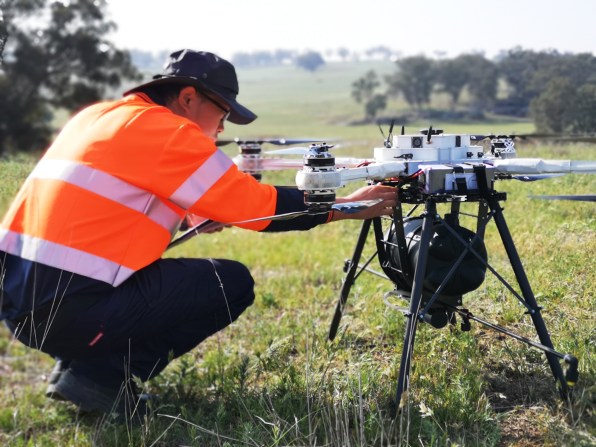
    The startup, which also uses drones to plant trees and grasses at abandoned mines in Australia and on sites in other parts of the world, is working with a nonprofit in Myanmar called Worldview International Foundation. To date, the nonprofit has worked with villagers to plant trees by hand. The project began in 2012, after the government began opening the country's borders to international business. More than six million trees have been planted so far, and the nonprofit plans to plant another four million by the end of 2019. But it also recognizes that humans can't easily cover the amount of land that could potential ly be restored.

    Within three states, roughly 350,000 hectares of coastal forest needs to be restored—an area nearly as large as Rhode Island. With about 5,000 trees able to grow in a hectare, that works out to more than a billion trees. "Obviously, planting a billion trees will take a long time without the help of drones," says Bremley Lyngdoh, founder and CEO of Worldview Impact, a separate nonprofit partnering with the Worldview International Foundation on its work in Myanmar. Two operators working with 10 drones can theoretically plant 400,000 trees in a day.

    The drones first fly over an area to map it, collecting data about the topography and soil condition that can be combined with satellite data and analyzed to determine the best locations to plant each seed. Then the drone fires biodegradable pods—filled with a germinated seed and nutrients—into the ground. For the process to succeed in a mangrove forest, several conditions need to be right; if the tide comes in unexpectedly, for example, the seeds could wash away. In tests, Biocarbon Engineering has looked at which species and environmental conditions perform best.

    [Photo: courtesy BioCarbon Engineering]

    If drones do begin to replant entire forests, humans will still play a critical role. That's in part because some seeds don't fit inside the pods. But people living nearby also need a reason to leave the trees standing. "The project in Myanmar is all about community development and enabling people to care for trees, providing them with jobs, and making environmental restoration in a way that it's profitable for people," says Fedorenko. "The forest didn't vanish by itself—the forest was cut down by local people."

    Roughly half of the world's mangrove forests have been lost. The trees, with twisted roots that reach underwater along coastlines, can store more carbon than trees on land. Mangrove deforestation is responsible for 24 million tons of CO2 emissions each year, according to a 2018 study. They also provide a barrier in storms; when a cyclone hit Myanmar in 2008, killing more than 100,000 people, the impact was also worse because there weren't as many trees left. Some trees are cut down to make way for aquaculture (ironically, because fish stocks drop dramatically when the trees disappear). The wood is also used to make charcoal.

    In Myanmar, Worldview International Foundation works closely with communities to help provide new economic opportunities. People who previously made money making charcoal, for example, are now employed as mangrove planters. They're also learning how to run aquaculture businesses within mangrove forests. "We have to incentivize people," says Lyngdoh. "It's all about creating livelihoods. We have to create jobs that are long-term that can sustain the family, then they see the benefit of the project, and they get engaged in the long term."

    Biocarbon Engineering also wants to help people in the community continue to get higher-paid, more technical jobs. "We train local people to be drone pilots," says Fedorenko. "And they want that. They want to be in IT. They want to process data, they want to fly drones, they want to do agroforestry, they want to do regenerative agriculture, they want to create vertical farms . . . they want to do all this cool stuff. It's not the ambition to be a seedling planter for $1 a day."

    The trees can also earn revenue through carbon credits. Worldview International Foundation's work has been validated so that it can sell carbon offsets to companies; that money comes back to the community and keeps the work going. Biocarbon Engineering is now talking with brands that want to sponsor tree planting, so that when consumers make a purchase, a tree is planted. The drones could share data about specific trees with consumers. "We can literally see every single tree and the leaves on the tree if we need to," she says. "It opens up this new market for people to see the connection with trees and to say, 'Wow, this is my tree. I planted that.'"

    Worldview International Foundation also works with farmers in India to restore forests in mountains, and in Sri Lanka. Lyngdoh is interested in working with Biocarbon Engineering to bring the drones to those areas as well after proving that the process can work at a larger scale in Myanmar. Ultimately, drones could help support much more massive tree planting, which would have a significant impact on climate change: researchers recently calculated that there is enough room to plant another 1.2 trillion trees, which could suck up more carbon each year than humans emit.

    Corrections: This article has been updated to note the difference between Worldview Impact and Worldview International Foundation, and to correct the spelling of Fedorenko's name.

    Perennials for all season, how to plant them, and why the evergreens look brown: This Weekend in the Garden

    Which flowers bloom when?

    The season's earliest-blooming perennial flowers kick into color this month.

    The main benefit of perennials is that they live for years. You don't have to replant them every year as with petunias, marigolds, zinnias, and other annual flowers.

    The down side is that most perennials bloom for only a few weeks out of the whole season.

    To have a parade of color all season from perennials, the solution is to plant a variety of species that bloom at different times. With good planning, you'll have a garden in which a new perennial starts blooming just as an earlier one is fading.

    Below is a guide to peak-bloom times in central Pennsylvania to help you plan. Now is a good time to plant them all.

    March: Lenten rose.

    April: Barrenwort, bergenia, bleeding heart, bloodroot, brunnera, columbine, creeping phlox, euphorbia, foamflower, lamium, primrose, pulmonaria, rock cress, Virginia bluebell.

    May: Amsonia, bachelor button, baptisia, candytuft, catmint, creeping veronica, dianthus, foamybell, forget-me-knot, fringe-leaf bleeding heart, geum, goats beard, hardy geranium, Jacob's ladder, lamium, lily of the valley, meadow rue, iris, peony, poppy, salvia, snow-in-summer, sweet woodruff, Solomon's seal, thrift, trillium.

    June: Astilbe, bellflower, catmint, coralbells, coreopsis, daylily, delphinium, evening primrose, filipendula, foxglove, gaillardia, gaura, hardy geranium, hosta, knautia, lady's mantle, lamium, lavender, lupine, penstemon, red hot poker, rodgersia, rose mallow, scabiosa, shasta daisy, spiderwort, tiger lily, verbascum, veronica, yarrow, yucca.

    July: Agastache, Asiatic and Oriental lilies, baby's breath, balloon flower, beebalm, black-eyed susan, blackberry lily, butterfly weed, cimicifuga, coreopsis, crocosmia, garden phlox, heliopsis, hollyhock, hosta, Jupiter's beard, liatris, obedient plant, purple coneflower, Russian sage, sea holly, stokesia, veronicastrum.

    August: Aster, cardinal flower, goldenrod, Japanese anemone, Joe Pye weed, leadwort, ligularia, liriope, monkshood, perennial sunflower, purple coneflower, reblooming daylily, Russian sage, sedum, sneezeweed, turtlehead.

    September: Aster, boltonia, catmint, gaillardia, goldenrod, Japanese anemone, mum, salvia, sedum, toad lily, turtlehead.

    October: Aster, goldenrod, mum, Nippon and Montauk daisy.

    You might need to work compost into your soil before planting perennials if it's clayish like this.

    You might need to work compost into your soil before planting perennials if it's clayish like this.

    Perennial planting

    It's best to plant new perennials on a cloudy day, in the evening, or when rain is in the forecast. Those conditions reduce the shock of transplanting.

    Give store-bought perennials a few days outside in their pots before planting to make sure they're acclimated. Most perennials are grown in greenhouses, and when you buy early in the season, the plants may not have been displayed for very long outside at the garden center yet.

    If your soil is clayish or compacted, improve it before planting by working an inch or two of compost, rotted leaves, mushroom soil, or similar organic matter into the loosened top 10 or 12 inches of existing soil.

    Most perennials can be planted 18 to 24 inches apart. The biggest ones, such as large hostas, hardy hibiscus, and ornamental grasses, can go three to four feet apart.

    Always soak the soil around perennials immediately after planting to make sure the soil is settled around the roots and the ground is damp.

    One to two inches of mulch is plenty, preferably pulled back from touching the plant stems.

    Yellow or brown needles aren't a problem on evergreens so long as the discoloration is limited to the inside part of the branches, not out to the tips.

    Yellow or brown needles aren't a problem on evergreens so long as the discoloration is limited to the inside part of the branches, not out to the tips.

    Brown needles on the evergreens?

    Don't be too alarmed if you see a lot of yellow or brown needles on your evergreens. So long as those colors are limited to the inside of the branches, it's just natural needle drop.

    Needles toward the inside of the branches are older ones that drop gradually as the branches grow and produce new green needles toward the ends.

    Unlike deciduous trees like maple, dogwood, and cherry, evergreens don't shed all of their leaves every fall. However, they do discard older needles. Some species drop a lot of year-old needles (white pine is the most pronounced), while some hold needles three or four years before dropping them.

    Inner needle drop can be heavier in some years than others, usually due to environmental stress, particularly heat and drought.

    Last year's ridiculously rainy and disease-plagued season followed by a sudden early-fall snowstorm (Winter Storm Avery) combined to cause noticeably more leaf drop on evergreens such as Hinoki cypress, cryptomeria, and pines.

    No need to do anything if those and other evergreens look to be unusually yellow or brown. If the tips are still green, that's good.

    The discolored needles eventually will drop, and this spring's new growth will fill in and make the plants denser.

    If the discoloration bugs you, run your fingers up and down the branches to dislodge them.

    It's a different story if the branches have yellow or brown needles all the way to the end of the branches. That's usually a sign of root failure, most likely from roots rotting in last season's wet soil.

    Give those plants a chance to see if new needles grow. If there's enough life in the branches, the plant could recover. If not, prune off dead branches or replace the plant later this spring or summer if it's mostly or completely dead.

    domingo, 14 de abril de 2019

    Sikhs around the world aim to plant million trees as ‘gift to planet’

    Londonâ€"Sikhs around the world are taking part in a scheme to plant a million new trees as a “gift to the entire planet” as part of celebrations to mark the 550th birth anniversary of Sikhism founder Guru Nanak, the media reported on Friday.

    According to the Guardian, the project aims to reverse environmental decline and help people reconnect with nature.

    Rajwant Singh, the President of the Washington DC-based environmental organisation EcoSikh, which is coordinating the Million Tree Project, said he wanted to mark the anniversary in a significant way.

    EcoSikh collaborates with thousands of Sikh Gurdwaras and institutions all over India, Malaysia, Pakistan, the US, UK, Australia, France, Hong Kong, Norway and many other countries.

    The Sikh diaspora has taken on the challenge and tens of thousands of trees have already been planted, the report said, adding that most of the trees were planted in India and also in the UK, US, Australia and Kenya.

    “Guru Nanak was a nature lover. (He) had talked about nature as a manifestation of God and many of his writings talk about how we need to learn lessons of life from nature,” said Singh.

    He said he hoped the project would motivate Sikhs â€" especially the young â€" to improve their relationship with nature and would be seen more broadly as “a gift to the entire planet”.

    Sikh Union Coventry, an environmental organization based in Washington, said it plans to plant 550 trees in the Coventry area and has already started planting native trees, shrubs and flowers such as hazel and hawthorn at various sites.

    Sikh Union Coventry chair Palvinder Singh Chana said: “As Sikhs, our connection to the environment is an integral part of our faith and identity. Future generations will benefit from the fruits of our labour, symbolising peace, friendships and continuity for generations to come.”

    People involved in the drive said that the million tree target would be achieved by the time of Guru Nanak’s birthday in November. (IANS)

    Related

    quinta-feira, 11 de abril de 2019

    How to Decide Where to Plant Trees in Your Yard

    Plant trees in well-draining locations.

    Plant trees in well-draining locations.

    As real estate agents often say, it's all about location. This is true in many areas of life, including gardening. Planting a tree can add beauty to any landscape, but only if you place the tree correctly. Before putting a tree in your backyard, first evaluate your options for planting sites and pick one that meets several important criteria.

    To Infinity, Not Beyond

    Unless you're a farmer with many acres of land, you don't have an infinite amount of space in your yard. The spot that you pick for your tree must give the tree enough room to expand its canopy and stretch out its roots without affecting nearby structures, sidewalks, overhead power lines or underground utilities. In fact, many tree species need 50 feet or more of buffer space around them.

    A Wind in the Willows

    Trees play a major role in your backyard climate, as well as the heating and cooling costs of your home. Place a tree upwind of your home to help block out the wind and save on heating costs in the winter. In many locales, this means setting your tree up on the north or west sides of your landscape. If you're trying to save on cooling costs in the summer, a well-placed tree can also shield out the sun and shade your home. For this use, plant your trees on the east or west edges of your landscape.

    Down the Drain

    For the healthiest roots and fastest growth, most tree species require well-draining soil conditions. Create drainage testing holes in all of your tree planting site options to test how well the area drains. Dig an 18-inch-deep hole and fill it with water. Ideally, the water should drain out of the hole within two hours, but up to one day is acceptable. If it takes longer than one day to drain, the site isn't suitable for planting your tree unless you're willing to incorporate heavy amounts of soil amendments into the area to loosen the soil structure.

    The Eyes Have It

    Selecting a planting site for your tree is as much about you as it is about the tree. Consider how the tree's placement will affect the visual beauty of your backyard. Place the tree in areas where its foliage and blossoms complement nearby plants and structures. Additionally, consider the tree's mature size. Small tree varieties will look lost and out of place in a big yard, while large trees may visually overwhelm smaller yards. If you're planting multiple tree sizes, layer them visually by planting the larger trees on the perimeter of your property and placing the smaller trees closer to your field of vision.

    ]]> About the Author Joshua Duvauchelle

    Joshua Duvauchelle is a certified personal trainer and health journalist, relationships expert and gardening specialist. His articles and advice have appeared in dozens of magazines, including exercise workouts in Shape, relationship guides for Alive and lifestyle tips for Lifehacker. In his spare time, he enjoys yoga and urban patio gardening.

    Photo Credits
  • Comstock/Stockbyte/Getty Images
  • bibliography-iconicon for annotation tool Cite this Article Choose Citation Style MLA APA Chicago (B)

    Duvauchelle, Joshua. "How to Decide Where to Plant Trees in Your Yard." Home Guides | SF Gate, http://homeguides.sfgate.com/decide-plant-trees-yard-97294.html. Accessed 11 April 2019.

    Duvauchelle, Joshua. (n.d.). How to Decide Where to Plant Trees in Your Yard. Home Guides | SF Gate. Retrieved from http://homeguides.sfgate.com/decide-plant-trees-yard-97294.html

    Duvauchelle, Joshua. "How to Decide Where to Plant Trees in Your Yard" accessed April 11, 2019. http://homeguides.sfgate.com/decide-plant-trees-yard-97294.html

    Copy Citation

    Note: Depending on which text editor you're pasting into, you might have to add the italics to the site name.

    Song Premiere: Ben Danaher Traces the Path to Home On Poignant 'Apple and the Tree'

    What path do our parents set for us? Are we destined to follow in their footsteps, or can they show us the way around missteps and pitfalls? Those are the questions Ben Danaher poses on the poignant and arresting "Apple and the Tree," a song about how mothers and fathers can shape us while still allowing us to grow.

    The song is from the perspective of a parent speaking to their child and encouraging them to dream even bigger than they did.

    "Strong and stubborn, my roots run deep/ I never wondered where else I should be," Danaher sings. "There's a whole lot of blue skies I never got to see/ I hope the apple falls farther than the tree."

    Danaher says the song, which he co-wrote with Olivia Rudeen, is a tribute to parents who want more for their children than they were allowed.

    "This song is a realization that our parents wanted us to have every opportunity available in this world," Danaher tells Wide Open Country. "They lived great colorful lives but were able to show us ways around things that held them back. They were selfless. I hope to be that way with my children, should I be lucky enough to have any."

    Listen to "Apple and the Tree" below.

    Danaher released his debut full-length album Still Feel Lucky in 2018.

    For more information on Ben Danaher, visit his official website.

    Can a tree grow in the forest if the federal government isn’t around to fund it?

    According to the Detroit News, on his way to the rally in Grand Rapids Thursday night, President Trump spoke with Michigan Republicans and decided not to cut the Great Lakes Restoration Initiative (GLRI) from $300 million to $30 million in the upcoming budget.

    Trump was met at the Gerald R. Ford International Airport in Grand Rapids by Republican U.S. Reps. Bill Huizenga of Zeeland, John Moolenaar of Midland and Jack Bergman of Watersmeet, state Rep. Matt Hall and former Michigan Attorney General Bill Schuette.

    After a discussion with the congressional Republicans en route to the rally, Trump announced he would abandon a budget proposal to slash funding 90 percent for the Great Lakes Restoration Initiative, a plan criticized by Michigan Republicans and Democrats alike. The initiative will be fully financed at $300 million, he said, as it has in recent budgets after Congress restored the funding.

    "I support the Great Lakes," Trump said. "They're beautiful. They're big, very deep. Record deepness, right?"

    I'm not sure about record deepness, but I am sure that throwing money down the drain every year to try to erase human "interference" with nature is record stupidity.

    First of all, the Great Lakes are indeed important. But it really doesn't take much poking around the over 3,500 projects the GLRI is responsible for to see how ridiculous some of these projects are and, in some cases, how doing nothing would produce the same result.

    The GLRI is popular with politicians because it signals that they care about the environment. It is popular with voters because they believe the effort is doing something to save the environment, a cause we have all been conditioned to fight for. But we've spent over $2 billion on programs like wild rice restoration in Allouez Bay, Wisconsin. Why, you ask? Here is what the University of Wisconsin-Superior noted:

    Historically, wild rice provided an important food and cultural component for Native American tribes including the Ojibwa, Menomonee, and Dakota. Early Wisconsin explorers described abundant wild rice beds that hindered their travel on many waterways. Wild rice is also a source of nutrition to various mammals and bird species. Besides nutritious food, the rice beds provide roosting and resting areas to adult birds and essential brood cover for their young. Declines in historic wild rice beds have occurred statewide due to many factors, including dams, pollution, large boat wakes, and invasive plant species.

    Got that? The whole program is to erase man's footprint and restore the area to the prohibitive gnarly past that frustrated explorers in search of a human habitat.

    But isn't man part of nature?

    To re-establish wild rice in Allouez Bay, which had been knocked back but not eradicated by human existence, UW-Superior explained what happened when man attempted to grow wild rice in a vastly changed habitat.

    Wild rice seeding activities occurred in two areas covering 4 acres during the fall of 2010 and spring of 2011. Small protective exclosures (20m X 20m) were installed to evaluate the browsing pressure from geese, muskrats and carp. Results depicted heavy browsing pressure, with the only viable seed production occurring in the exclosures.

    Mother Nature is a bitch, no? That means we spent tons of money on bird seed.

    Because funding of the GLRI never changed, the money continued every year to plant wild rice in Allouez Bay.

    In 2016, according to the U.S. Fish and Wildlife Service:

    One-thousand-three-hundred pounds of wild rice was seeded in select locations of Allouez Bay during the first two weeks of September, 2016. GLIFWC sourced and delivered rice for the project and all rice came from waterways in Minnesota.

    So for seven years, they kept seeding wild rice.

    To mimic the way wild rice would normally disperse (via wind), student workers threw handfuls of rice into the air, casting it relatively evenly throughout each inlet.

    For seven years we've planted grass in a swampy area.

    I've planted 10,000 trees on my property. Many of them died because of nature. Animals eat vegetation. Nature took over. If I had massive funding from the federal government, I would have replanted every year, made cages, and forced nature to comply with what I wanted to see. That's basically what we are funding.

    Many of the trees I planted died because deer were hungry, but through the years, nearby trees cast off their seeds, which grew into saplings. Some of the saplings were eaten by animals ("browsing pressure"), and some survived and have now taken over the edge of the field where I planted the trees.

    So, can a tree grow in the forest if the federal government isn't around to fund it? Yep. It just takes a while and zero dollars. The forest grows whether we are there or not.

    Here's another example of ridiculous federal funding in the GLRI report to Congress in fiscal year 2016. "AOC" in this report means Areas of Concern, not Alexandria Ocasio-Cortez, although she is one.

    In FY 2016, federal agencies and their partners finished the management actions needed to delist the St. Clair River AOC in Michigan. One of the habitat projects at St. Clair River, Marysville Living Shoreline, is shown here.

    What man hath created, the federal government can and will destroy.

    According to the naturalists at St. Clair River,

    The City of Marysville's Living Shoreline Restoration Project competed against 1,000 other applicants to become one of the 270 projects funded under the Great Lakes Restoration Initiative, and in 2012 the project was completed on the banks of the St. Clair River. This project involved habitat restoration and establishing native plant life. To accomplish this, a total of 1,885 feet of steel seawall was removed and replaced with a reinforced rocky shoreline creating a more naturalized shoreline.

    It makes it sound like an explanation for a living room makeover by an interior decorator. Designer shorelines made to look jungle-esque by Sebastian. They are doing makeovers, when nature will ultimately take over.

    On a day trip driving down the back roads of neighboring counties, I took a snapshot of an old house in the middle of a wheat field. The house had been abandoned for maybe 30 years, and a tree was growing in the middle of the house, with its branches reaching out through the long-gone window panes. Nature accomplished her takeover for free.

    The whole premise of the Obama administration's original funding of the GLRI was to erase man's footprint. With so many politicians willing to accept this ridiculous premise because it makes them feel and look good, more stuff like this will waste our money as the federal government futilely tries to snuff out man's work.

    The funny thing about nature is that you can't micromanage it. Nature is in charge. Ask any farmer. Yet we have spent billions of federal dollars over the past nine years, and now we are looking at a lost decade because the Republicans have convinced Trump that the Democrat initiative makes them look and feel good.

    Trump has tried every year to cut the funding for the GLRI from $300 million to $30 million. Obama started the funding at $475 million, then to $300 million every year since 2010. In his last two budgets, Obama offered cuts of $50 million and $25 million, but Congress wouldn't even cut that much. By this time next year, we will have spent $3.175 billion dollars, with no end in sight.

    Author: Jen Kuznicki

    Jen Kuznicki is a contributor to Conservative Review, a blue-collar wife and mom, a political writer, humorist, and conservative activist, a seamstress by trade, and compelled to write. Follow her on Twitter @JenKuznicki.


    About me